
Restored Apollo 11 Moonwalk - Original NASA EVA Mission Video - Walking on the Moon
 Original Mission Video as aired in July 1969 depicting the Apollo 11 astronauts conducting several tasks during extravehicular activity (EVA) operations on the surface of the moon. The EVA lasted approximately 2.5 hours with all scientific activities being completed satisfactorily. The Apollo 11 (EVA) began at 10:39:33 p.m. EDT on July 20, 1969 when Astronaut Neil Armstrong emerged from the spacecraft first. While descending, he released the Modularized Equipment Stowage Assembly on the Lunar Module's descent stage. A camera on this module provided live television coverage of man's first step on the Moon. On this, their one and only EVA, the astronauts had a great deal to do in a short time. During this first visit to the Moon, the astronauts remained within about 100 meters of the lunar module, collected about 47 pounds of samples, and deployed four experiments. After spending approximately 2 hours and 31 minutes on the surface, the astronauts ended the EVA at 1:11:13 a.m. EDT on July 21.
Perseverance Rover’s Descent and Touchdown on Mars (Official NASA Video)
 NASA's Mars 2020 Perseverance mission captured thrilling footage of its rover landing in Mars' Jezero Crater on Feb. 18, 2021. The real footage in this video was captured by several cameras that are part of the rover's entry, descent, and landing suite. The views include a camera looking down from the spacecraft's descent stage (a kind of rocket-powered jet pack that helps fly the rover to its landing site), a camera on the rover looking up at the descent stage, a camera on the top of the aeroshell (a capsule protecting the rover) looking up at that parachute, and a camera on the bottom of the rover looking down at the Martian surface.
The audio embedded in the video comes from the mission control call-outs during entry, descent, and landing.
For more information about Perseverance, visit https://mars.nasa.gov/perseverance
Credit: NASA/JPL-Caltech
NASA's Mars 2020 Perseverance mission captured thrilling footage of its rover landing in Mars' Jezero Crater on Feb. 18, 2021. The real footage in this video was captured by several cameras that are part of the rover's entry, descent, and landing suite. The views include a camera looking down from the spacecraft's descent stage (a kind of rocket-powered jet pack that helps fly the rover to its landing site), a camera on the rover looking up at the descent stage, a camera on the top of the aeroshell (a capsule protecting the rover) looking up at that parachute, and a camera on the bottom of the rover looking down at the Martian surface.
The audio embedded in the video comes from the mission control call-outs during entry, descent, and landing.
For more information about Perseverance, visit https://mars.nasa.gov/perseverance
Credit: NASA/JPL-CaltechDeparting Space Station Commander Provides Tour of Orbital Laboratory
 In her final days as Commander of the International Space Station, Sunita Williams of NASA recorded an extensive tour of the orbital laboratory and downlinked the video on Nov. 18, just hours before she, cosmonaut Yuri Malenchenko and Flight Engineer Aki Hoshide of the Japan Aerospace Exploration Agency departed in their Soyuz TMA-05M spacecraft for a landing on the steppe of Kazakhstan. The tour includes scenes of each of the station's modules and research facilities with a running narrative by Williams of the work that has taken place and which is ongoing aboard the orbital outpost.
STS-129 HD Launch
 Space shuttle Atlantis and its six-member crew began an 11-day delivery flight to the International Space Station on Monday with a 2:28 p.m. EST launch from NASA's Kennedy Space Center in Florida. The shuttle will transport spare hardware to the outpost and return a station crew member who spent more than two months in space.
Atlantis is carrying about 30,000 pounds of replacement parts for systems that provide power to the station, keep it from overheating, and maintain a proper orientation in space. The large equipment can best be transported using the shuttle's unique capabilities.
Space shuttle Atlantis and its six-member crew began an 11-day delivery flight to the International Space Station on Monday with a 2:28 p.m. EST launch from NASA's Kennedy Space Center in Florida. The shuttle will transport spare hardware to the outpost and return a station crew member who spent more than two months in space.
Atlantis is carrying about 30,000 pounds of replacement parts for systems that provide power to the station, keep it from overheating, and maintain a proper orientation in space. The large equipment can best be transported using the shuttle's unique capabilities.Tour from Space: Inside the SpaceX Crew Dragon Spacecraft on Its Way to the Space Station
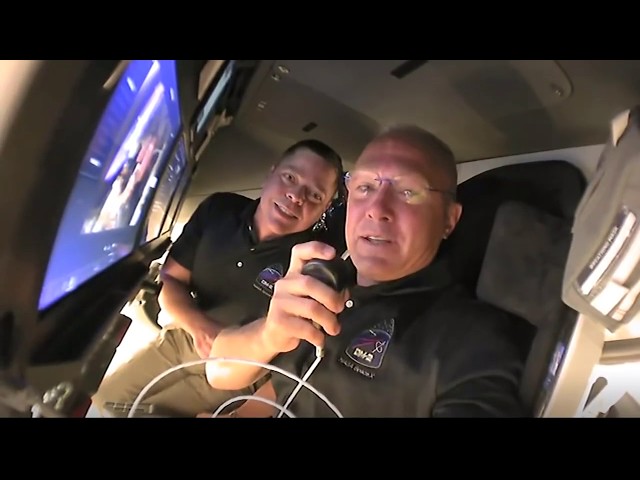 In this video, NASA astronauts Robert Behnken and Douglas Hurley take viewers on a tour of the SpaceX Crew Dragon spacecraft that will take them on a 19-hour-journey to their new home in orbit.
The SpaceX Falcon 9 rocket and Crew Dragon spacecraft successfully launched from Kennedy Space Center’s historic Launch Pad 39A at 3:22 p.m. EDT on May 30 with the astronauts aboard for a mission to the orbiting laboratory. Crew Dragon will perform a series of phasing maneuvers to gradually approach and autonomously dock with the International Space Station on Sunday, May 31, at approximately 10:29 a.m. EDT.
Learn more about the mission by visiting https://www.nasa.gov/launchamerica
In this video, NASA astronauts Robert Behnken and Douglas Hurley take viewers on a tour of the SpaceX Crew Dragon spacecraft that will take them on a 19-hour-journey to their new home in orbit.
The SpaceX Falcon 9 rocket and Crew Dragon spacecraft successfully launched from Kennedy Space Center’s historic Launch Pad 39A at 3:22 p.m. EDT on May 30 with the astronauts aboard for a mission to the orbiting laboratory. Crew Dragon will perform a series of phasing maneuvers to gradually approach and autonomously dock with the International Space Station on Sunday, May 31, at approximately 10:29 a.m. EDT.
Learn more about the mission by visiting https://www.nasa.gov/launchamericaApollo 13: ‘Houston, We’ve Had a Problem’
 “Houston, we've had a problem” is the now famous phrase radioed from Apollo 13 to Mission Control upon the catastrophic explosion that dramatically changed the mission.
On the 50th Anniversary of the Apollo 13 mission, we recognize the triumph of the mission control team and the astronauts, and look at the lessons learned. The Apollo 13 mission has become known as “a successful failure” that saw the safe return of its crew Commander James (Jim) Lovell Jr., Command Module Pilot John Swigert Jr. and Lunar Module Pilot Fred Haise Jr.
Thanks to Stephen Slater and Ben Feist/Apollo in Real Time (apolloinrealtime.org/13) for providing additional footage and audio. Thanks for Andy Saunders for providing additional enhanced images.
Video Credit:
Producer/Editor: Amy Leniart
“Houston, we've had a problem” is the now famous phrase radioed from Apollo 13 to Mission Control upon the catastrophic explosion that dramatically changed the mission.
On the 50th Anniversary of the Apollo 13 mission, we recognize the triumph of the mission control team and the astronauts, and look at the lessons learned. The Apollo 13 mission has become known as “a successful failure” that saw the safe return of its crew Commander James (Jim) Lovell Jr., Command Module Pilot John Swigert Jr. and Lunar Module Pilot Fred Haise Jr.
Thanks to Stephen Slater and Ben Feist/Apollo in Real Time (apolloinrealtime.org/13) for providing additional footage and audio. Thanks for Andy Saunders for providing additional enhanced images.
Video Credit:
Producer/Editor: Amy LeniartWaking up, working, and going to sleep in Zero G
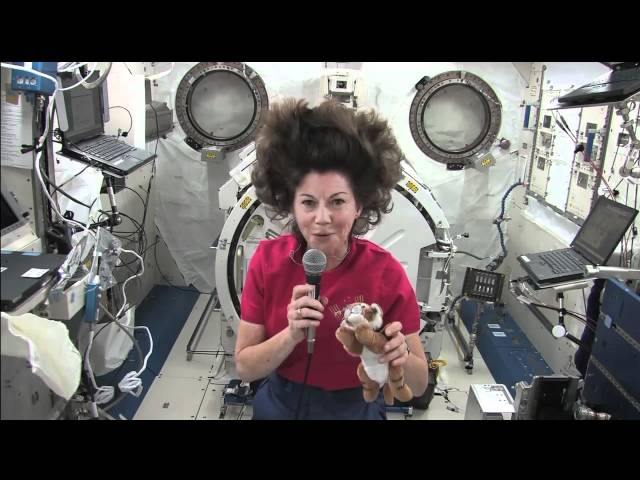 Expedition 26 NASA Flight Engineer Cady Coleman discusses what daily life is like aboard an orbiting space laboratory on CBS' news program "The Talk" on January 18, 2011.
Fly into the Great Red Spot of Jupiter with NASA’s Juno Mission
 This animation takes the viewer on a simulated flight into, and then out of, Jupiter’s upper atmosphere at the location of the Great Red Spot. It was created by combining an image from the JunoCam imager on NASA's Juno spacecraft with a computer-generated animation.
The perspective begins about 2,000 miles (3,000 kilometers) above the cloud tops of the planet's southern hemisphere. The bar at far left indicates altitude during the quick descent; a second gauge next to that depicts the dramatic increase in temperature that occurs as the perspective dives deeper down. The clouds turn crimson as the perspective passes through the Great Red Spot. Finally, the view ascends out of the spot.
For more, visit https://www.nasa.gov/feature/jpl/nasas-juno-probes-the-depths-of-jupiters-great-red-spot
This animation takes the viewer on a simulated flight into, and then out of, Jupiter’s upper atmosphere at the location of the Great Red Spot. It was created by combining an image from the JunoCam imager on NASA's Juno spacecraft with a computer-generated animation.
The perspective begins about 2,000 miles (3,000 kilometers) above the cloud tops of the planet's southern hemisphere. The bar at far left indicates altitude during the quick descent; a second gauge next to that depicts the dramatic increase in temperature that occurs as the perspective dives deeper down. The clouds turn crimson as the perspective passes through the Great Red Spot. Finally, the view ascends out of the spot.
For more, visit https://www.nasa.gov/feature/jpl/nasas-juno-probes-the-depths-of-jupiters-great-red-spotNASA | Sounds of the Sun (Low Frequency)
 NASA heliophysicist Alex Young explains how sound connects us with the Sun and all other stars. This piece features low frequency sounds of the Sun. Raw audio (no commentary): https://youtu.be/-I-zdmg_Dno Read more: https://go.nasa.gov/2JR0wLL
Credit: NASA's Goddard Space Flight Center
Micheala Sosby (NASA/GSFC): Lead Producer
Katie Atkinson (GSFC Interns): Lead Producer
C. Alex Young (NASA/GSFC): Narrator
Aaron E. Lepsch (ADNET Systems Inc.): Technical Support
Music: "Flow" by Lee Rosevere
This video is public domain and along with other supporting materials can be downloaded from the Scientific Visualization Studio at: https://svs.gsfc.nasa.gov/13011
NASA heliophysicist Alex Young explains how sound connects us with the Sun and all other stars. This piece features low frequency sounds of the Sun. Raw audio (no commentary): https://youtu.be/-I-zdmg_Dno Read more: https://go.nasa.gov/2JR0wLL
Credit: NASA's Goddard Space Flight Center
Micheala Sosby (NASA/GSFC): Lead Producer
Katie Atkinson (GSFC Interns): Lead Producer
C. Alex Young (NASA/GSFC): Narrator
Aaron E. Lepsch (ADNET Systems Inc.): Technical Support
Music: "Flow" by Lee Rosevere
This video is public domain and along with other supporting materials can be downloaded from the Scientific Visualization Studio at: https://svs.gsfc.nasa.gov/13011Stunning Aurora Borealis from Space in Ultra-High Definition (4K)
 NASA Television’s newest offering, NASA TV UHD, brings ultra-high definition video to a new level with the kind of imagery only the world’s leader in space exploration could provide.
Harmonic produced this show exclusively for NASA TV UHD, using time-lapses shot from the International Space Station, showing both the Aurora Borealis and Aurora Australis phenomena that occur when electrically charged electrons and protons in the Earth's magnetic field collide with neutral atoms in the upper atmosphere.
For more info: http://go.nasa.gov/1lyUGlY
NASA Television’s newest offering, NASA TV UHD, brings ultra-high definition video to a new level with the kind of imagery only the world’s leader in space exploration could provide.
Harmonic produced this show exclusively for NASA TV UHD, using time-lapses shot from the International Space Station, showing both the Aurora Borealis and Aurora Australis phenomena that occur when electrically charged electrons and protons in the Earth's magnetic field collide with neutral atoms in the upper atmosphere.
For more info: http://go.nasa.gov/1lyUGlYArtemis I Path to the Pad: NASA Series Trailer
 Through Artemis, NASA will once again land humans on the Moon. But before that can happen, we must first launch our Space Launch System (SLS) rocket—the most powerful rocket we've ever built—and Orion spacecraft on a flight test around the Moon. Join us as we document this moment in history and watch as we follow SLS and Orion on their path to the pad. The first episode of this series will premiere here on Aug. 12, 2022.
All about Artemis I: https://www.nasa.gov/specials/artemis-i/
Writer: Danielle Sempsrott
Editor: Francisco Martin
Producers: John Sackman, Michael Justice & Madison Tuttle
Credit: NASA
#Artemis #NASA #KennedySpaceCenter #Moon #Space #Orion #PathToThePad
Through Artemis, NASA will once again land humans on the Moon. But before that can happen, we must first launch our Space Launch System (SLS) rocket—the most powerful rocket we've ever built—and Orion spacecraft on a flight test around the Moon. Join us as we document this moment in history and watch as we follow SLS and Orion on their path to the pad. The first episode of this series will premiere here on Aug. 12, 2022.
All about Artemis I: https://www.nasa.gov/specials/artemis-i/
Writer: Danielle Sempsrott
Editor: Francisco Martin
Producers: John Sackman, Michael Justice & Madison Tuttle
Credit: NASA
#Artemis #NASA #KennedySpaceCenter #Moon #Space #Orion #PathToThePadArtemis I Path to the Pad: The Rocket
 Have you ever wondered what it takes to assemble the most powerful rocket NASA has ever built? Watch documentary footage of our Space Launch System (SLS) rocket's transformation into the over-300-foot-tall launch vehicle that will return humanity to the Moon.
Starting with manufacturing and ending with stacking operations inside NASA Kennedy Space Center's Vehicle Assembly Building, this is only the beginning of SLS's path to the pad.
All about Artemis I: https://www.nasa.gov/specials/artemis-i
Writer: Danielle Sempsrott
Editor: Francisco Martin
Producers: John Sackman, Michael Justice & Madison Tuttle
Music courtesy of Gothic Storm Music
Credit: NASA
#Artemis #NASA #KennedySpaceCenter #Moon #Space #Orion #PathToThePad
Have you ever wondered what it takes to assemble the most powerful rocket NASA has ever built? Watch documentary footage of our Space Launch System (SLS) rocket's transformation into the over-300-foot-tall launch vehicle that will return humanity to the Moon.
Starting with manufacturing and ending with stacking operations inside NASA Kennedy Space Center's Vehicle Assembly Building, this is only the beginning of SLS's path to the pad.
All about Artemis I: https://www.nasa.gov/specials/artemis-i
Writer: Danielle Sempsrott
Editor: Francisco Martin
Producers: John Sackman, Michael Justice & Madison Tuttle
Music courtesy of Gothic Storm Music
Credit: NASA
#Artemis #NASA #KennedySpaceCenter #Moon #Space #Orion #PathToThePadArtemis I Path to the Pad: The Spacecraft
 Named after one of the largest constellations in the night sky, Orion is the name given to the spacecraft that will carry the first woman and first person of color to the Moon. But before we fly astronauts aboard, the spacecraft, powered by our Space Launch System rocket, will travel tens of thousands of miles on a flight test around the Moon. Watch as teams at NASA's Kennedy Space Center prepare Orion for that journey, outfitting the spacecraft with its necessary components as it moves along its path to the pad.
All about Artemis I: https://www.nasa.gov/specials/artemis-i/
Writer: Danielle Sempsrott
Editor: Francisco Martin
Producers: John Sackman, Michael Justice & Madison Tuttle
Music courtesy of Gothic Storm Music
Credit: NASA
Named after one of the largest constellations in the night sky, Orion is the name given to the spacecraft that will carry the first woman and first person of color to the Moon. But before we fly astronauts aboard, the spacecraft, powered by our Space Launch System rocket, will travel tens of thousands of miles on a flight test around the Moon. Watch as teams at NASA's Kennedy Space Center prepare Orion for that journey, outfitting the spacecraft with its necessary components as it moves along its path to the pad.
All about Artemis I: https://www.nasa.gov/specials/artemis-i/
Writer: Danielle Sempsrott
Editor: Francisco Martin
Producers: John Sackman, Michael Justice & Madison Tuttle
Music courtesy of Gothic Storm Music
Credit: NASAArtemis I Path to the Pad: Roll to the Pad
 Before our Space Launch System (SLS) rocket and Orion spacecraft can launch our nation into a new era of spaceflight, the duo must first undergo a wet dress rehearsal at the launch pad prior to liftoff.
Watch SLS and Orion continue on their path to the pad as they travel to Kennedy Space Center's Launch Pad 39B for a full countdown rehearsal - an operation involving hundreds of engineers stationed all across the nation.
All about Artemis I: https://www.nasa.gov/specials/artemis-i/
Credits:
Writer: Danielle Sempsrott
Editor: Francisco Martin
Producers: John Sackman, Michael Justice & Madison Tuttle
Music courtesy of Gothic Storm Music
Credit: NASA
Before our Space Launch System (SLS) rocket and Orion spacecraft can launch our nation into a new era of spaceflight, the duo must first undergo a wet dress rehearsal at the launch pad prior to liftoff.
Watch SLS and Orion continue on their path to the pad as they travel to Kennedy Space Center's Launch Pad 39B for a full countdown rehearsal - an operation involving hundreds of engineers stationed all across the nation.
All about Artemis I: https://www.nasa.gov/specials/artemis-i/
Credits:
Writer: Danielle Sempsrott
Editor: Francisco Martin
Producers: John Sackman, Michael Justice & Madison Tuttle
Music courtesy of Gothic Storm Music
Credit: NASAArtemis I Path to the Pad: Launch and Recovery
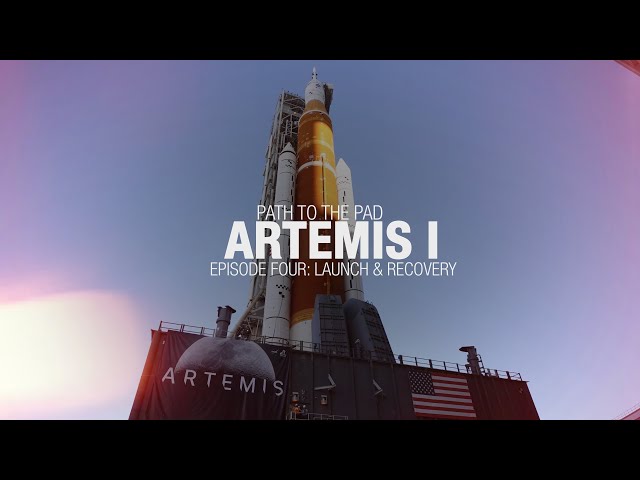 On Nov. 16, 2022, NASA made history with the launch of our Space Launch System (SLS) rocket and Orion spacecraft – our newest transportation system that will return humans to the Moon. Relive the powerful moment SLS rumbled away from Earth, beginning Orion’s three-week test flight around the Moon, and watch as we document Orion’s splashdown in the Pacific Ocean, closing the first chapter in America’s next deep space exploration story.
All about Artemis I: https://www.nasa.gov/specials/artemis-i/
Writer: Danielle Sempsrott
Editor: Francisco Martin
Producers: John Sackman, Michael Justice & Madison Tuttle
Music courtesy of Gothic Storm Music
Credit: NASA
On Nov. 16, 2022, NASA made history with the launch of our Space Launch System (SLS) rocket and Orion spacecraft – our newest transportation system that will return humans to the Moon. Relive the powerful moment SLS rumbled away from Earth, beginning Orion’s three-week test flight around the Moon, and watch as we document Orion’s splashdown in the Pacific Ocean, closing the first chapter in America’s next deep space exploration story.
All about Artemis I: https://www.nasa.gov/specials/artemis-i/
Writer: Danielle Sempsrott
Editor: Francisco Martin
Producers: John Sackman, Michael Justice & Madison Tuttle
Music courtesy of Gothic Storm Music
Credit: NASA